The URD’s alliances have changed with the political cycles; its main demand has not. From one election to the next, the party has made the independence of electoral administration the condition for any election accepted by all. This file brings together its public positions as reported in the press, from the late 2010s to the October 2026 proposal.
Before 2018: a call for compromise
After the ruling of the African Court on Human and Peoples’ Rights pointing to the imbalance in the CEI’s composition, Fraternité Matin reported a call by Danièle Boni-Claverie for mutual concessions on the commission, the electoral code and electoral boundaries (late 2010s).
2018: a targeted partnership with EDS
On 1 February 2018, the URD entered into a partnership — not a membership — with the platform Ensemble pour la démocratie et la souveraineté (EDS), led by Georges-Armand Ouégnin, focused on a single goal: reforming the electoral commission.
2019-2020: no reform without consensus
On 7 September 2019, the URD President denounced the adoption of a CEI reform without agreement between political actors and called for dialogue to resume; she also warned that an identity card costing 5,000 CFA francs could keep some voters away from the polls, especially in rural areas. On 4 March 2020, she described as a “half-measure” the reshuffle that took the central commission from 15 to 16 members; like the PDCI-RDA, the URD refused to appoint representatives to it.
2025: for a "truly independent" CEI
On 11 April 2025, after the PPA-CI representative withdrew from the commission, Danièle Boni-Claverie called for an independent, impartial and credible institution, seeing it as confirmation of the positions defended by the URD. In July, she publicly pointed to anomalies in the voters’ roll and warned of the risk of a disputed election.
2026: from dissolution to a fully built proposal
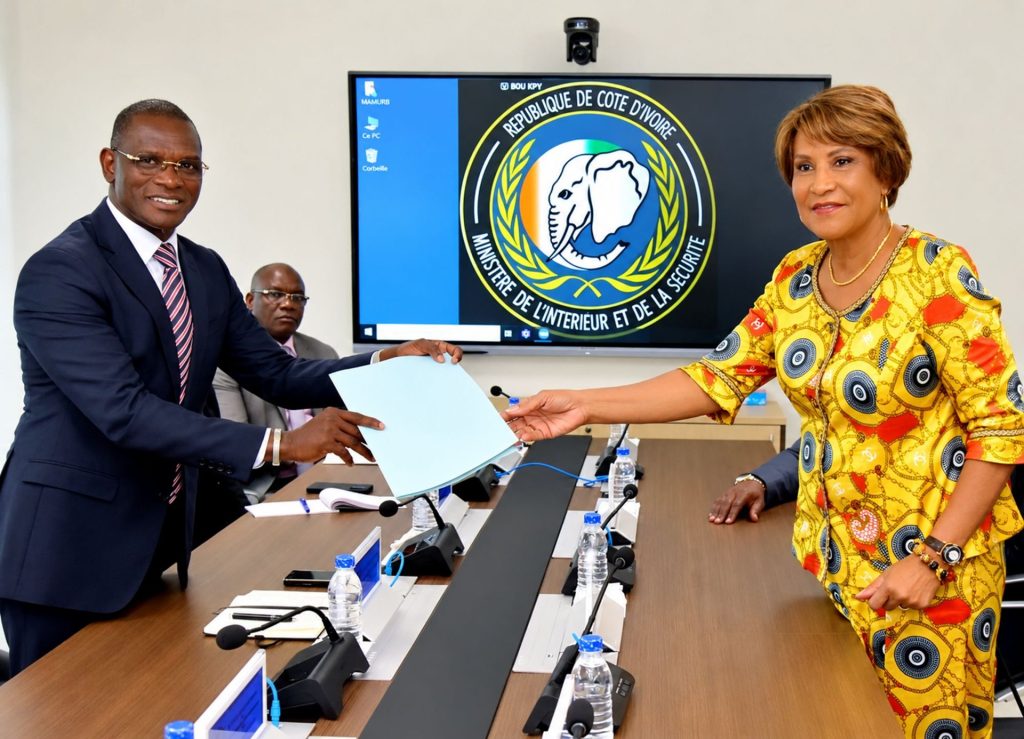
When the Council of Ministers dissolved the CEI on 6 May 2026, the URD welcomed a measure it had long called for and asked for a body entrusted to civil society. On 22 June, the government presented a three-body architecture; other political forces submitted their own plans over the summer and autumn. On 2 October 2026, the URD President handed the party’s proposal to the Minister of the Interior: a single, independent and neutral institution, whose members would be chosen after public hearings.
What the record shows
Three demands recur at every stage: a referee who belongs to no camp, a reform adopted by consensus rather than imposed, and a voters’ roll that can be verified. The 2026 proposal turns them into precise mechanisms.