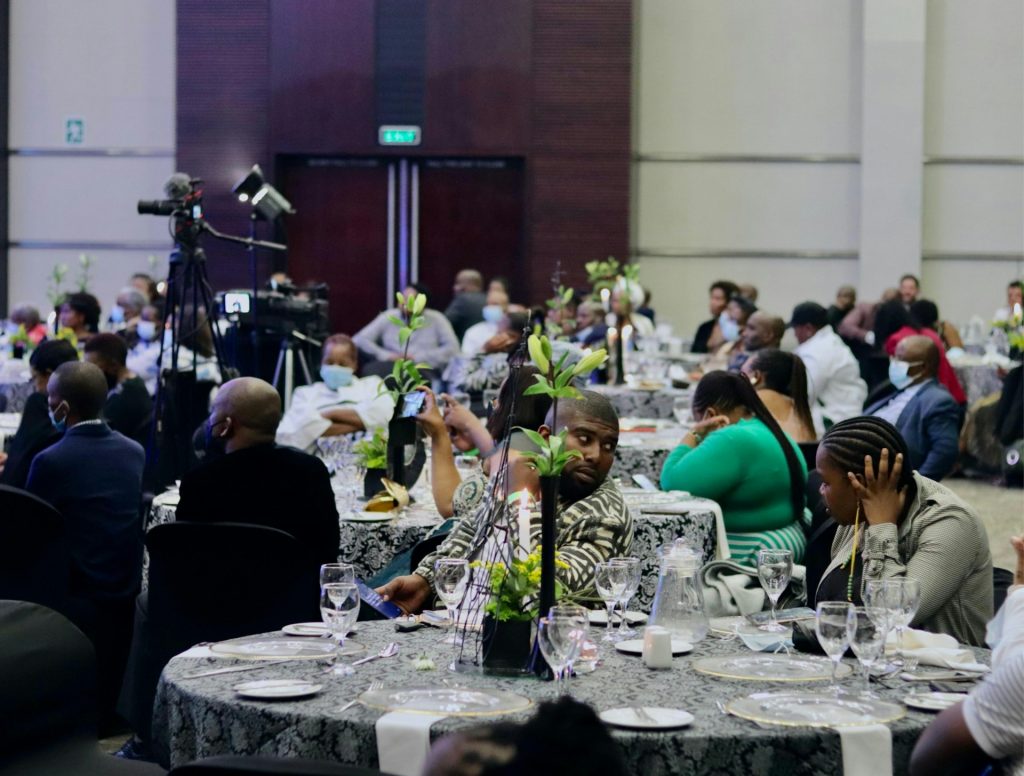
Can a distant conflict fill or empty a family’s shopping basket in Abidjan? That is the question the Republican Union for Democracy chose to raise in public on Tuesday 28 April 2026, at the Palm Club hotel in Abidjan, during a URD Forum entitled “Middle East crisis: the political and economic stakes and their impact on the Ivorian economy”. Entry was free, in keeping with the principle of the URD Forums: debating with everyone, not only party members.

Middle East crisis: impact on the Ivorian economy — URD public conference (in French) · Watch on YouTube
The video is loaded from YouTube only when you click play.
Why the URD took up the issue
Opening the session, the URD President, Mrs Danièle Boni-Claverie, observed that Ivorians did not seem concerned by this conflict. That is precisely why the party chose to debate it: a crisis affecting oil, fertiliser and shipping always ends up in the prices families pay. Informing people before the shock hits is what a force for proposals is for.
The diagnosis: a price shock ahead
The keynote speaker, Dr Sylvain N’Guessan of the Abidjan Institute of Strategies, set the conflict in its geopolitical context — the United States and Israel on one side, Iran and its nuclear programme on the other. Above all, he detailed the consequences for countries that do not produce oil: disruption in the Strait of Hormuz would push up fuel prices, then fertiliser, then food. According to his analysis, the effects on prices would be felt as early as May and June.
The ideas put forward
- Reduce dependence on imported rice by supporting national production;
- Encourage local production of basic necessities;
- Develop solar energy to limit exposure to oil price swings;
- Keep citizens better informed: Dr Christophe Kouamé, President of Civis-Ci, called for indicators measuring the crisis’s impact on the Ivorian economy to be published every quarter.
What the URD takes away
This Forum illustrates the URD’s method: start from a concrete concern of Ivorians — here, the cost of living — shed light on it with expertise, then turn it into proposals. Its conclusions feed into the party’s “Purchasing power and rural life” priority.
Take part in the next URD Forum
URD Forums are open to everyone, members or not. Register to hear about the next date.